
Best Wellness Retreats in India: Zacs Valley
A wellness retreat resort is a property built specifically around restoring your physical and mental health, combining accommodation with structured therapies like Ayurveda, yoga, naturopathy, and spa treatments, rather than treating wellness as an add-on to a regular holiday. If you’ve been scrolling through generic “best resorts in India” lists and coming away with more questions than answers, this guide is built to fix that.
You’ll learn what actually separates a genuine wellness retreat resort from a hotel with a spa menu, which Indian states do it best, what an Ayurvedic session really involves, and how to budget for one without overpaying. Whether you’re planning a solo reset, a couples’ escape, or your first Panchakarma detox, you’re about to get a far more practical roadmap than most travel blogs offer.
What Is a Wellness Retreat Resort?
A wellness retreat resort is a purpose-built property where the entire guest experience, from meal planning to room design to daily schedules, is structured around a therapeutic outcome. Unlike a standard hotel that bolts a spa onto its amenities list, a genuine wellness retreat resort employs trained therapists, follows a defined treatment system (usually Ayurveda, naturopathy, or yoga-based), and often customizes your stay after a consultation.
This distinction matters because the term gets diluted online. Plenty of properties call themselves a wellness retreat resort simply because they offer a 45-minute massage. A real one will ask about your health history before recommending therapies, source ingredients and oils according to traditional formulations, and design your days around rest, movement, and digestion rather than sightseeing.
Wellness Retreat vs. Regular Resort vs. Spa Hotel
It helps to separate three categories that get used interchangeably:
- Regular resort: Focused on leisure, adventure, and amenities. A spa may exist but plays a supporting role.
- Spa hotel: Offers a strong spa menu (facials, massages, salon services) but rarely follows a structured healing system or dietary protocol.
- Wellness retreat resort: Built around a therapeutic framework, often Ayurvedic or naturopathic, with trained practitioners, curated meals, and a program that unfolds over multiple days rather than a single treatment.
If your goal is genuine recovery, whether from burnout, poor sleep, or a specific health concern, the third category is what you should be searching for, and it’s worth checking a property’s therapist credentials before booking rather than relying on marketing photos alone.
Why India Leads the World in Wellness Retreat Resorts
India isn’t just one option among many for wellness travel; it’s the origin point of several systems the rest of the world has since adopted. Ayurveda, Yoga, Siddha, and Naturopathy all developed on Indian soil over centuries, and the government has invested directly in formalizing and promoting this advantage.
The Ministry of Tourism has drafted specific guidelines for wellness tourism and worked with the National Board for Accreditation of Hospitals & Healthcare Services (NABH) to create quality benchmarks for wellness centers, precisely because the sector grew fast enough to attract both credible operators and less rigorous ones. Separately, the Ministry of AYUSH was formed as a dedicated central ministry to develop education, research, and international outreach for Ayurveda, Yoga, Naturopathy, Unani, Siddha, and Homoeopathy, and has introduced a dedicated AYUSH visa category to make it easier for international travelers to access certified treatment centers.
What this means for you practically: when you choose an accredited wellness retreat resort in India, you’re tapping into a system with government oversight, trained practitioner pipelines, and centuries of refined technique, not a wellness trend invented for Instagram. That’s a meaningfully different starting point than wellness offerings in destinations where the practice is newly imported.
Types of Wellness Retreat Resorts You'll Find in India
Not every wellness retreat resort follows the same approach. Knowing the differences helps you pick one that matches what you actually need.
Ayurvedic Wellness Resorts
An ayurvedic wellness resort follows the Ayurvedic system, which diagnoses your body type (dosha) and prescribes therapies, diet, and herbal oils accordingly. Common treatments include Abhyangam (synchronized full-body massage), Shirodhara (a continuous stream of warm oil poured over the forehead), and Panchakarma, a multi-day detoxification program. These resorts typically employ therapists trained in Kerala’s traditional Ayurvedic lineage, since Kerala is widely considered the discipline’s home base.
Yoga and Meditation Retreats
These focus on asana practice, breathwork (pranayama), and meditation, often with daily guided sessions rather than one-off classes. Rishikesh, on the banks of the Ganges, is India’s most recognized hub for this category.
Naturopathy and Detox Centers
Naturopathy resorts use natural elements like mud, water, diet, and fasting protocols to support the body’s own healing processes, generally avoiding oils and herbal medicine in favor of lifestyle-based intervention.
Luxury Spa Resorts
These blend five-star hospitality with wellness therapies, offering private pool villas, gourmet wellness cuisine, and curated spa menus alongside (rather than instead of) leisure amenities. This category suits travelers who want restoration without giving up comfort or scenery, and it’s where many hill-station and coastal properties in India now compete.
Best Wellness Retreat Resort Destinations in India
Where you go shapes what kind of wellness experience you get. Here’s how the major regions compare.
Kerala, the Birthplace of Ayurveda
Kerala remains the gold standard for an authentic ayurvedic wellness resort experience. Its backwaters and monsoon season (considered ideal for Panchakarma) draw travelers specifically seeking traditional treatment rather than a general getaway.
Tamil Nadu’s Hill Station Wellness Resorts
A wellness resort in Tamil Nadu, particularly in hill stations like Kodaikanal and Ooty, offers something Kerala’s backwaters can’t: elevation, cooler climate, and forested seclusion that amplifies the effects of rest and detox therapies. The altitude naturally slows your pace, and the surrounding Shola forests and lakes reduce the sensory overload that undermines recovery in busier destinations. Properties here increasingly combine Kerala-trained Ayurvedic therapists with the natural advantage of hill terrain, giving Tamil Nadu a genuine edge for travelers who want a wellness retreat resort without sacrificing scenery or activity options like nature walks and trekking.
Rishikesh and the Himalayan Belt
For yoga-first travelers, Rishikesh and the surrounding Himalayan foothills offer ashram-style and boutique retreat options built around daily practice, satsang, and the spiritual context of the Ganges.
Goa’s Beachside Wellness Circuit
Goa blends beach leisure with wellness, appealing to travelers who want spa therapies alongside a coastal holiday rather than an intensive multi-day protocol.
How to Choose the Right Wellness Retreat Resort
Use this checklist before booking any wellness retreat resort, in India or elsewhere:
- Check therapist credentials. Ask whether therapists are Kerala-trained or formally certified in the system the resort claims to follow.
- Ask about accreditation. NABH-accredited wellness centers have met a documented quality standard, not just a marketing claim.
- Confirm the consultation process. A legitimate ayurvedic wellness resort will assess your health and dosha before recommending a program, not hand you a fixed spa menu.
- Match the setting to your goal. Want deep detox and stillness? Prioritize seclusion and altitude, like a wellness resort in Tamil Nadu’s hill country. Want activity balanced with recovery? Look for a property that pairs therapy with nature walks, farm-to-table dining, or light adventure.
- Review the accommodation, not just the spa. Recovery depends on sleep quality and environment as much as treatment, so private villas, natural surroundings, and quiet locations matter more than they get credit for.
- Ask what’s included. Meals, therapy sessions, and consultations should be itemized upfront so you’re not comparing a stripped-down rate against a full-service one.
What to Expect During a Stay at an Ayurvedic Wellness Resort
A typical multi-day stay follows a rhythm rather than a checklist of one-off treatments. Most programs begin with a consultation where a therapist reviews your health history and identifies your dominant dosha. From there, mornings often start early with light movement or breathing exercises, followed by a therapy session, usually Abhyangam or a similar oil-based massage, timed around your body’s natural rhythms.
Meals are typically light, seasonal, and designed to support digestion rather than indulge it; expect fewer processed ingredients and more herbal preparations than a standard resort menu. Afternoons may include rest periods, a second shorter therapy, or guided walks, since overstimulation works against the treatment’s purpose. Evenings tend to wind down early, with minimal screen time encouraged, especially during a Panchakarma protocol, which can run anywhere from three to fourteen days depending on the depth of detox you and your therapist agree on.
The biggest adjustment for first-timers isn’t the treatments themselves, it’s the pace. A genuine wellness retreat resort deliberately removes the busyness of a normal holiday, and travelers who go in expecting constant activity are often surprised by how much unstructured stillness is actually part of the program.
What Does a Wellness Retreat Resort in India Cost?
Pricing varies widely based on location, accommodation type, and treatment intensity. As a general guide:
- Entry-level wellness stays (spa hotel with occasional Ayurvedic treatments): budget-friendly, typically bundled with standard room rates.
- Mid-range wellness retreat resorts (structured multi-day programs, private cottages or villas, dedicated therapists): moderate to premium pricing, often sold as packages covering accommodation, meals, and daily therapy.
- Luxury Panchakarma or extended detox programs: priced at the higher end, reflecting longer stays, private pool villas, and daily one-on-one therapist attention.
Rather than comparing a single night’s rate, compare the full package cost per day of your intended stay, since a resort with a slightly higher nightly rate but all-inclusive therapy and meals often works out more economical than one that charges separately for each session.
Where Most Wellness Travel Guides Fall Short
Most articles ranking for “wellness retreat resort” stop at a list of pretty properties. They rarely explain how to verify a resort’s Ayurvedic credentials, what a Panchakarma schedule actually looks like day to day, or why hill-station geography (versus backwater or beach settings) changes the quality of your rest. That gap is exactly why so many travelers arrive at a “wellness” resort expecting a therapeutic reset and instead get a spa menu attached to a regular holiday.
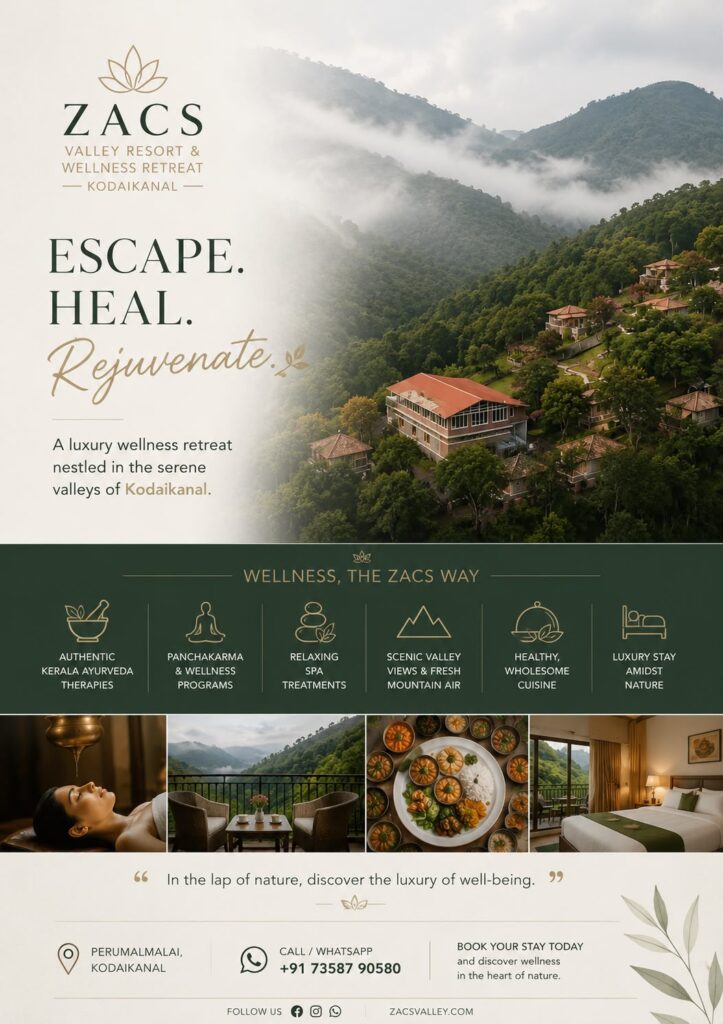
If you’re weighing a wellness resort in Tamil Nadu specifically, Zac’s Valley Resort & Wellness Retreat in Kodaikanal brings together the elements this guide has walked through: Kerala-trained Ayurvedic therapists, Panchakarma and Abhyangam therapies rooted in traditional technique, and a secluded hill-country setting inside a national park that does much of the recovery work on its own. You can explore the full range of treatments on the wellness page or see the spa program in detail on the spa and wellness page. Guests who want to combine therapy with valley views and private pool villas can browse the available cottages and villas, and those who’d like to balance rest with light adventure can check the Kodaikanal activities and nearby sightseeing available during a stay. Seasonal wellness packages are listed on the offers page, and you can check dates directly through online booking.
Conclusion
Choosing the right wellness retreat resort< comes down to matching the setting, the therapy system, and the pace of the program to what you actually need, not just picking the property with the best photos. India’s advantage here is structural: centuries-old systems like Ayurveda and Yoga, backed by government accreditation frameworks and a growing network of trained practitioners, give you a level of authenticity that’s hard to find elsewhere.
Whether you gravitate toward Kerala’s backwaters, the Himalayan calm of Rishikesh, or a wellness resort in Tamil Nadu’s cooler hill country, the principle stays the same: prioritize credentials, ask about the consultation process, and choose a setting that supports stillness rather than working against it. If Tamil Nadu’s hills are calling, Zac’s Valley Resort & Wellness Retreat in Kodaikanal is a good place to start planning your reset.
FAQ
A wellness retreat resort is a property designed around therapeutic recovery rather than general leisure. It typically follows a structured system, most commonly Ayurveda, yoga, or naturopathy, with trained practitioners, curated meals, and a program built around your specific health goals rather than a standalone spa menu.
Beyond relaxation, a genuine wellness retreat resort can improve sleep quality, support digestion through curated meals, reduce stress via structured therapy and reduced screen time, and give you a professional health consultation you wouldn't get from a standard hotel stay. Many travelers also report better clarity and energy after completing a multi-day program like Panchakarma.
A regular resort centers its offerings on leisure, dining variety, and activities, with a spa as one amenity among many. A wellness retreat resort restructures the entire stay, meals, schedule, therapy, and pace, around a specific health outcome, and usually starts with a consultation rather than a fixed menu of add-on services.
Yes. Many wellness retreat resorts offer couples' therapy sessions, private villas, and joint consultation options, making them a strong choice for couples who want to reconnect away from daily distractions while still receiving individualized treatment plans.